

STANDARD AUTOMATION
STANDARD AUTOMATION OVERVIEW
Standard automation is one of the main drivers for efficiency and quality improvement in multiple industries like manufacturing, pharma, food & beverages, energy & utilities, logistics, high-tech services, etc. Deploying modern solutions for product handling and product transportation everywhere in your business ensures 100% controllable and repeatable processes, which bring competitive advantages in terms of costs and efficiency. Lentis Technologies works with large portfolio of automation hardware like robots, manipulators, vibration bowls and feeders, conveyors and transporters. Which combination of the above to choose depends particularly on the use case – an industrial robot is very versatile and fast to repurpose and adjust, but maybe a more simple 2-axis manipulator is just right for robustly automating your pick & place operation, which will not change in the next years: Deploying not the fanciest and newest technology, but the one that suits precisely your needs and nothing more is what can help you and your business gain improvements at the right cost.
In order to ensure always tailormade and just right solutions for our customers even in standard automation context, we apply Lentis Technologies’ 6-step approach in the following way:
1
PROBLEM DEFINITION
We observe together with you the process that you want to automate (following Toyota’s TPM principles, we perform a “Gemba walk” together). All aspects should be covered and clear, because any ambiguity here will cost time and additional expenses throughout the project
2
PROCESS ASSESSMENT
If needed and allowed, our team will spend additional time on observing/analyzing the underlying processes and will prepare a report outlining possible improvements using automation
3
SOLUTION PROPOSAL
One week after discussing our assessment, you will receive solution concept and corresponding quote for the chosen automation approach. The concept always includes a timeline to fix the project steps and milestones.
4
AGILE PROJECT MANAGEMENT
After quote and solution concept is accepted, we will deliver in time and in cost the agreed solution. The following 3 main milestones will be completed together: Design freeze after final design review, acceptance test at our premises, factory acceptance test at your premises
5
SOLUTION DEPLOYMENT & VALIDATION
The formal Factory Acceptance Test is performed together and we mutually agree that required acceptance criteria are met
6
CONTINUOUS IMPROVEMENT
Besides submitting the required machine documentation, we will the process assessment from step 2 to discuss what can be the next steps towards perfection.
Several standard automation solutions can be found here:
In every manufacturing or logistics facility, one of the main activities is transporting products throughout the plant layout. This can be done either manual or automatically, however, better quality and control are only achieved when the process is controlled by automated conveyors without human interaction. We have used conveyors in multiple aspects from transporting products in micrometer precision in a high accuracy machine, to enabling automated product feed in assembly lines.


The requirements for a conveyor system can be very different: From high speed product transfer in large logistics centers, to high placing precision, ESD protection and minimal friciton to prevent partical contamination in the area. Lentis Technologies’ experts have faced all these challenges and can solve them either by utlizing standard, proven systems from leading brands like Bosch Rexroth, or by designing customized conveyors using state-of-the-art 3D printed components.
Manufacturing processes are typically a complex combination of parts handling, positioning and assembly, as well as specific processes like screwing, welding, soldering, painting, etc. Considering the Automotive industry as example how high-quality standards are achieved and maintained, we can state that automation is preferred in all activities. This is done to ensure repeatability and robustness of the processes, regardless of factors like tiresomeness, focus, daytime and others. While there are machines and systems developed to execute the complex processes like welding, assembly, milling, or any combination of them, still the standard practice is to use operators to put parts in the machine and take out the ready products. This also poses a risk for quality and process accuracy and we are specialized in eliminating those by automation the pick & place processes to feed assembly machines.
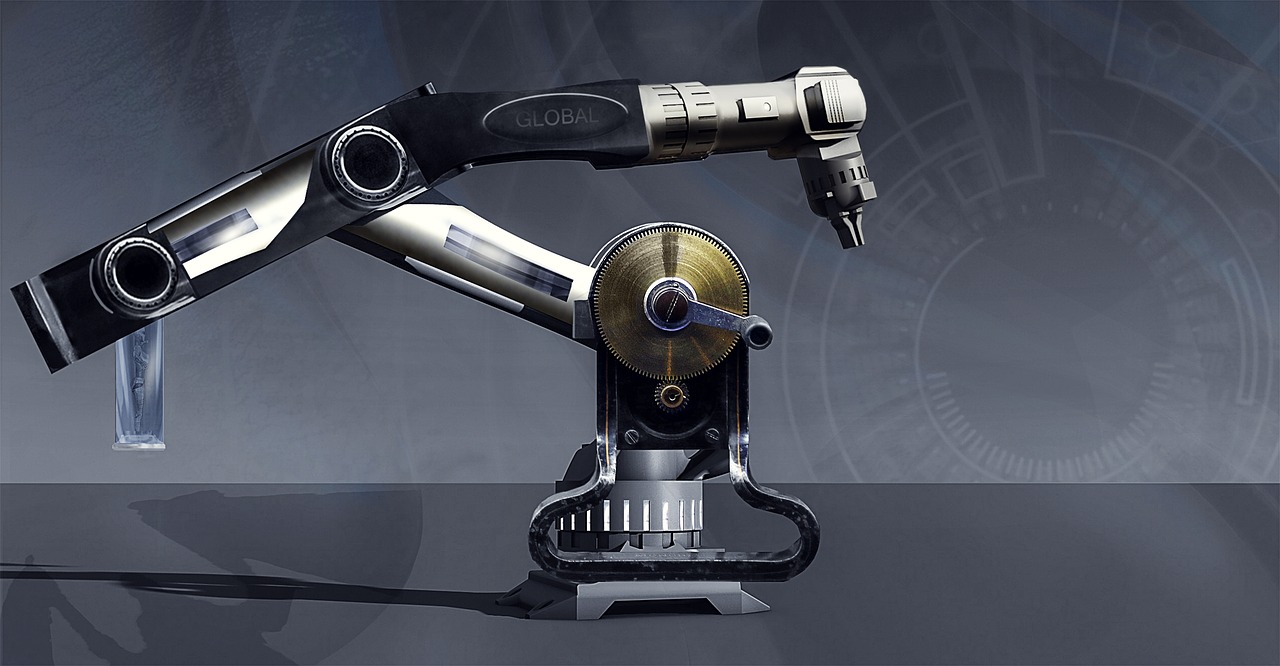

There are multiple aspects of the pick & place automation that need to be considered: How likely is that the operation mechanics will change in the future? How accurately must the parts fit in the machine? How sensitive are the parts and how they need to be handled? What packaging is used for these parts? We answer all these questions during the initial phases of our projects and ensure that our soltuion fit the real customer needs and budget. For example, we will always prefer to use a simple 2 or 3 axis manipulator instead of expensive robotic arm, when we know that the process is already established in a serial produciton and will not change in the future years. This allows for optimal cost control and just right automation solution.
FEATURED LENTIS TECHNOLOGIES PRODUCTS
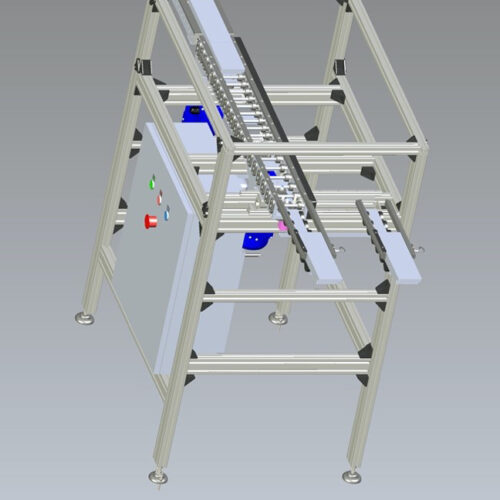
TRANSPORT SYSTEMS
Every assembly line requires means for transfer of products/parts from one station to another.
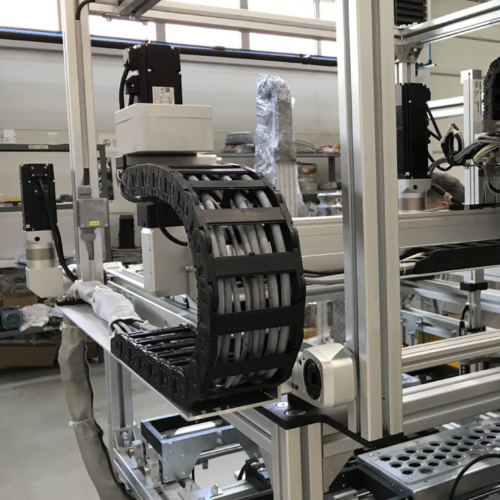
PICK & PLACE OPERATIONS
A prominent example for pick and place automation is the removal of NOK products from an assembly line.
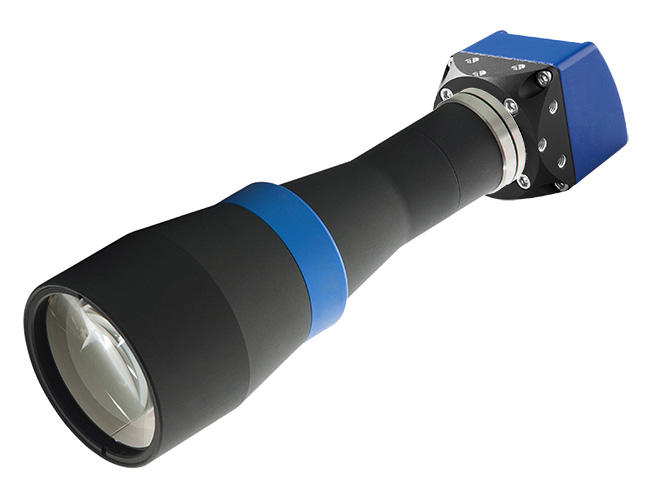
VISION AUTOMATION
Vision-powered automation refers to the use of advanced image processing and computer vision technology to automate industrial processes.
SMART CAMERA INTEGRATION
Smart and flexible way to deploy machine vision in your business.
TRANSPORT SYSTEMS
PICK & PLACE OPERATIONS

VISION POWERED AUTOMATION
