

Lentis Technologies’ mobile Robotic Waste Inspector (mRWI)
Concept Development
Mobile robot applications represent large area for development in automation technologies. Lentis Technologies is active in the field and partners with Mondragon University to demonstrate an end-to-end solution for adoption of fully autonomus mobile robotic applications in the scope of EARASHI challenge 3: Machine/tools for recycling goods, electronics, batteries. The project’s final stage is to fully automate all activities around waste sorting and separation by developing a “mobile Robotic Waste Inspector” (mRWI) machine. Lentis Technologies’ automation experience shows that such machine must be able to execute autonomously the following actions: Locate and reach waste in a recycling facility; capture images of the waste; analyze the image and (based on the analysis results and predefined sorting logics) perform physical actions like separation of specific waste components.
Lentis Technologies’ automation experience shows that such machine must be able to execute autonomously the following actions:
- Locate and reach waste in a recycling facility;
- Capture and analyze images of the waste;
- Perform physical actions like separation of specific waste components
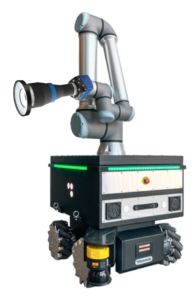
This example for mobile robot applications is realized by integration of 4 hardware modules:
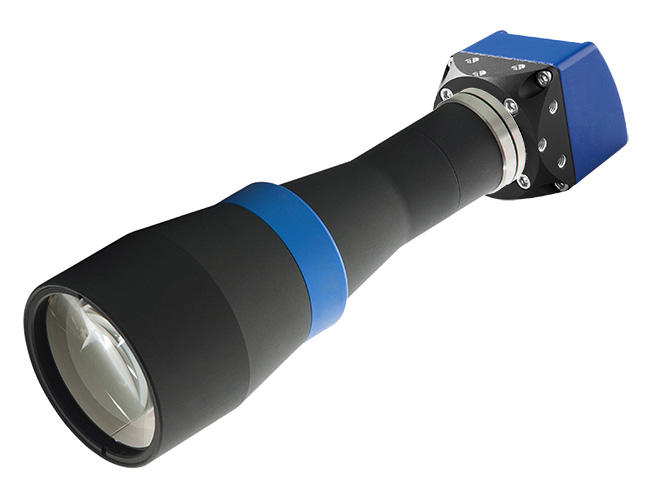
- Image capturing module: consisting of specifically chosen camera/lens/lighting setup, providing usable images for the analysis
- Image analysis module: GPU computing device allowing for training and deployment of state-of-the-art AI/ML algorithms
- Robotic arm to position the image capturing module and perform physical separation actions
- Mobile platform to allow free movement of the robotic arm and the image capturing module
This solution concept addresses one of the most complex and urgent challenges for all companies related to recycling and even manufacturing industries: How to automate processes, which depend on decisions made by the human eye. Regardless of the specific context, every recycling or manufacturing process inevitably contains at least one step, where an operator manually looks at parts/products and takes actions based on functional and cosmetic parameters, like presence of specific components, physical or other damages, correct appearance, etc. Successful completion of the project at hand will provide clear solution how to use current technologies for automation of such tasks, if the right sub-systems are developed and seamlessly integrated in a single machine. This will represent a breakthrough in the process automation using machine vision and clear market leader in this segment, because Lentis Technologies experts have more than 10 years’ experience in the industry and there are still no real examples on the market for end-to-end solutions for vision powered automation. Furthermore, such machine is prominent example for mobile robot applications and will be a ready-to-market product for multiple applications in different industries, due to the flexibility of the image analysis algorithms, which can today inspect waste for separation activities and tomorrow for example quality of some product.
The project concept addresses and provides solutions to following challenges:
- Low uniformity of the different types of wastes, requiring complex algorithms: Lentis Technologies has already implemented complex image analysis algorithms in relation to quality inspection automation in different industries. For example, our experts have achieved >99.9% accuracy in image analysis of complex tasks in the semiconductor manufacturing. Thus, we understand the complexity of this challenge and will address it in 2 way simultaneously: First, we will dedicate time to this project from our most senior AI/ML image recognition software developers and second we will seek active support and collaboration from the EARASHI partner Mondragon, who already have major development in this area
- Waste recognition efficiency and speed, supported by AI: Similar to the above point, the main technical challenge is indeed the development of image processing algorithms, which will be not only very accurate, but also efficient enough to not negatively impact the cycle time of the sorting and separation actions. Special attention and extra time for development will be dedicated to this deliverable and it will be main point of collaboration with the EARASHI building block provider
- Versatile grippers to pick mixed items: Every automation project contains the aspect of designing and implementing tailor-made grippers to allow execution of the pick and place operations without negative impacts. Lentis Technologies’ design engineers will receive the task to develop the specific grippers for the demonstration case
- Productivity of automated sorting/recycling systems: The mRWI machine will support businesses to reduce headcount and realize completely automated operations regarding Industry 4.0
- Cost-effectiveness compared to new products/components: Each one of the 4 hardware systems, that will build the machine, is complex to develop and fine tune, thus the overall read-to-market solutions will bring decisive advantages in terms of costs to start and costs to achieve the automation use case
- Human intervention limitation: The concept of mRWI machine completely ensures no human intervention at all in the waste sorting and separation activities
Market
The targeted market for the mRWI machine is consisting of all industrial companies in the European union, where labor cost are high and ensuring high process execution quality is a key differentiator. Automation is already a trend for optimizing costs by making repeatable processes executed more robustly and efficiently by robots and mobile robot applications are the top of the iceberg. However, the automation of processes, which depend on decisions based on optical inspection brings additional challenges, which are not yet completely solved: The right choice of image capturing setup (camera+lens+light) is always case-specific and requires knowledge and previous experience in this area to be done right. Consecutively, the development of high-performance software algorithms to classify objects with high accuracy in an image is very demanding software engineering tasks, where command of artificial intelligence and machine learning techniques is required.
Looking at the total market of recycling and manufacturing companies, this is the main sectors of the EU economy and we see clear growth trend. Looking just at the automotive industry, the European auto industry is a global player, delivering quality ‘Made in Europe’ products around the world, and generating a €74 billion trade surplus for the EU, ACEA repots. Furthermore, motor vehicles account for €440.4 billion in taxes in major European markets. The trend for growth is clearly driven by electrification.
However, all above market opportunities are related only to the commercial aspect. Looking at the possible social impacts, there are key advantages of deployment of such machines: Automating tiresome and unpleasant processes like waste inspection and separation will boost employee satisfaction as they will be able to develop other skills and perform more demanding and rewarding tasks. Every company can use this as an example for process improvement and workforce upskilling. Furthermore, such automation can bring significant benefits to the health and safety conditions in recycling plants, especially if there is risk for presence of health-threating substances, elements.
The business case is based on the market needs for process automation and labor cost optimization. Adding the increased process quality and efficiency boost, the only blocking point for widely adoption such machines can be the acquisition costs. Therefore, realizing such pilot projects under EARASHI program will help to overcome this challenge and allow to focus on the development of accurate and efficient hardware and software modules. Afterwards, this pilot research can be presented at both research conferences and trade fairs to disseminate the results and reach broader audience. In the commercial phase, the selling price will be optimized, because minimal research and development costs will be needed to actually deploy such machine in a specific customer context.